What Is a Fitting, and What Is Expected of You at One?
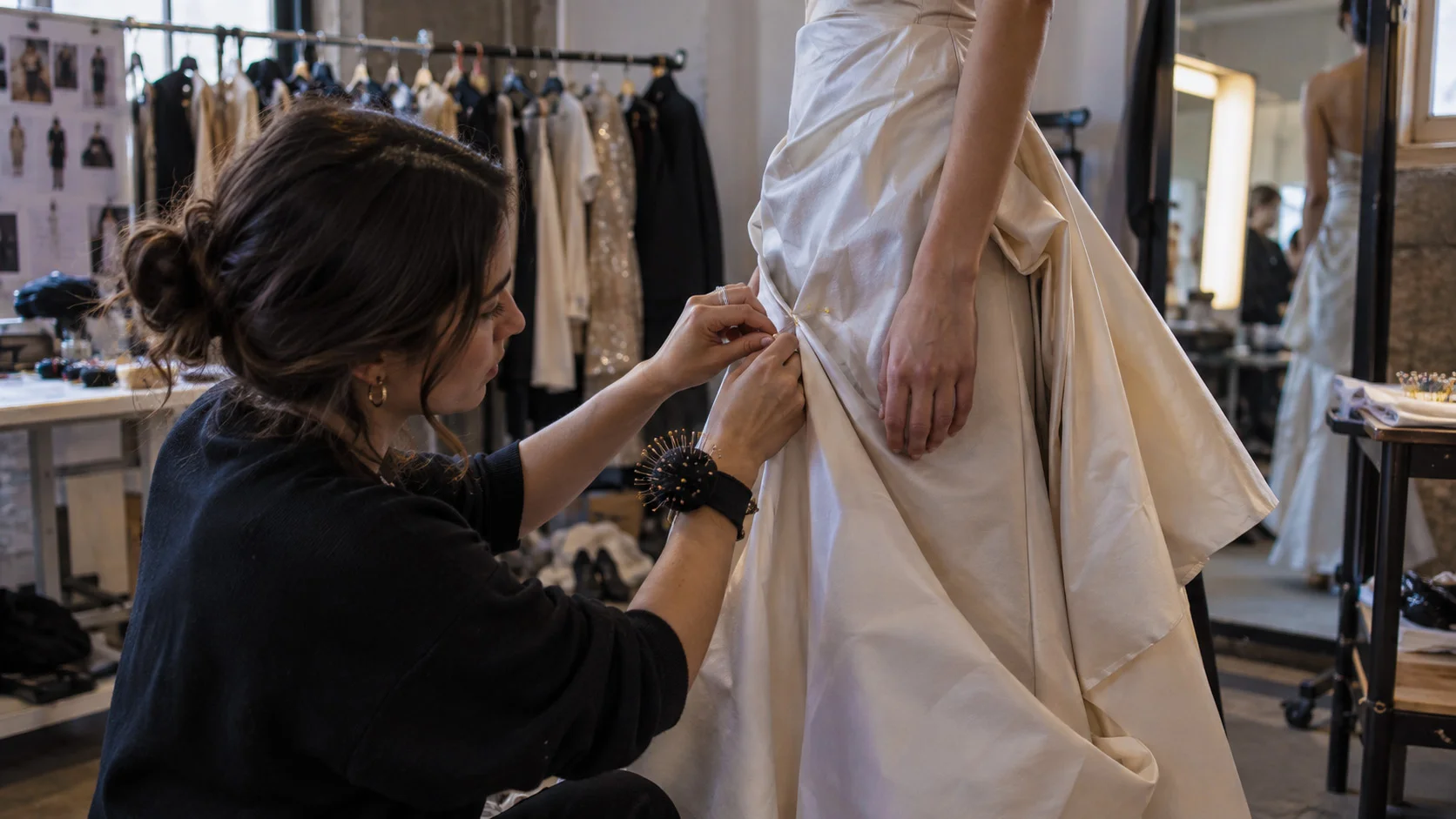
A fitting is a short appointment, usually thirty minutes to two hours, where you try on the clothes for a job that has already been booked. Nobody is deciding whether to hire you. That decision is made. The fitting exists so the team can see the garments on your actual body, decide which looks work, and pin, tape or swap whatever does not fit before the shoot day.
It is the wardrobe rehearsal. And because most beginners have never been told what happens in one, they walk in tense and treat it like a second casting, which is exactly the wrong instinct.
Here is the whole thing, in order.
Key Takeaways
A fitting is not an audition. You already have the job. Its purpose is to solve wardrobe problems before the shoot day, not to re-evaluate you.
Bring nude seamless underwear, clean skin and hair, and your honest measurements. Wear something you can get in and out of quickly.
What is expected of you: punctuality, standing still while pinned, changing fast, and saying out loud when something does not fit or hurts.
Fittings are work. Under New York's Fashion Workers Act, fit and showroom modeling count as modeling services, deal memos must arrive at least 24 hours before you start, and you may bring a chaperone.
Silence is the most expensive mistake. A garment you could not breathe in becomes a ruined shoot day.
What a Fitting Actually Is, and Who Is in the Room
The purpose is practical. Sample garments come in one or two sizes. Your body is not a sample size, because almost nobody is. So somebody has to find out, in advance and calmly, what needs a clip at the back, what needs a different shoe, and which of the six looks the client planned actually work on you.
Expect some combination of a stylist and their assistant, someone from the brand or client, occasionally the photographer or designer, and sometimes a tailor. On a small commercial job it might be one stylist and a rolling rack. At a fashion week fitting it can be a room full of people and a queue of models.
You will typically try on several looks, one at a time. Somebody will photograph each look on you, usually on a phone, as reference for the shoot day. Those photos are internal working documents, not published images.
A Note on the Word "Fitting"
Two different things share the name, and beginners mix them up constantly.
A fitting is the pre-shoot appointment described here, tied to a specific job.
Fit modeling is an entirely separate career. A fit model is hired because their measurements match a brand's target size block, and they come in repeatedly during garment development so the brand can build patterns around a consistent body. It is steady, technical, well paid work that has nothing to do with photographs, and it depends on your measurements staying stable.
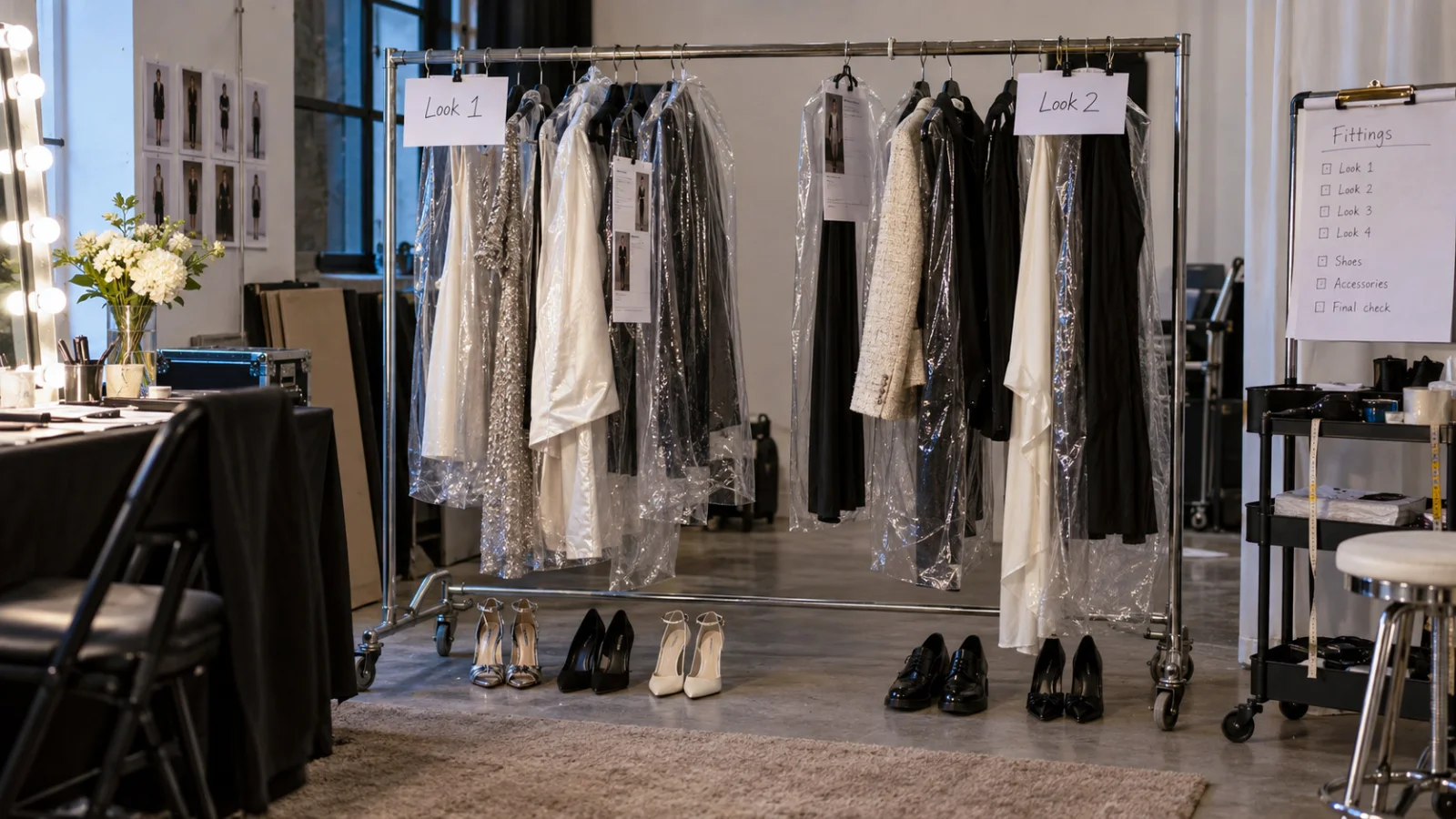
"Every look on that rack has to be solved before the shoot day, not on it."
Before: The Day Before and the Morning Of
Most of what makes a fitting go well is decided before you arrive.
Confirm the details in writing. Address, floor, time, expected duration, who to ask for, and what to bring. If a call sheet or deal memo exists, read it.
Bring nude seamless underwear. This is the single most common thing beginners get wrong. Bring a nude strapless bra and nude seamless briefs. No logos, no lace, no visible seams, no bright colours. You will be changing repeatedly and often quickly, and what is under the clothes has to disappear.
Come with clean skin and hair, and minimal makeup. You will be pulling garments over your head. Foundation transfers onto a client's sample, and that is a genuinely serious problem. Keep the face clean and the hair down and untied.
Wear something easy to remove. A dress or a loose top and trousers, slip-on shoes. You will be in and out of your own clothes ten times.
Know your real measurements. Height, bust or chest, waist, hips, shoe size, dress or suit size. If they changed since you last updated them, say so at the start rather than letting a sample fail. This is the same honesty rule that governs a comp card, and for the same reason: see our guide to what a comp card is and how it differs from your portfolio.
Bring: nude underwear, any shoes you were asked to bring, a hair tie in a pocket rather than on your wrist, water, and a snack for a long fitting.
Do not bring: strong perfume, self tanner applied the night before, fresh nail polish that can chip onto a garment, or a full face of makeup.
When You Arrive
Arrive five to ten minutes early, not thirty. Announce yourself, put your bag where you are told, and turn your phone to silent.
Somebody will show you the changing area. In a professional setting you get a private or screened space. If the only option offered is changing in front of the room and that makes you uncomfortable, you can ask for a screen, a corner, or a moment. That request is normal, and a reputable team accommodates it without comment.
Then it usually starts immediately. Fittings run on a clock, and often on a queue.
During: What You Actually Do
The job here is simple, physical and mostly passive. That surprises people.
Stand still while you are being pinned. Arms slightly away from your sides unless told otherwise, weight even, breathing normally. Pins go in fast and close to skin. Moving suddenly is how people get stuck.
Change quickly, and hang or hand back garments carefully. Do not drop a sample on the floor. Do not put it on a chair. Hand it to the assistant or hang it back on the rack.
Let them dress you. A stylist will reach across you, tuck, clip and adjust. That is the job, and it is not personal. What is not normal is being touched anywhere unrelated to the garment, and you are allowed to say so immediately.
Say something when a garment does not work. Out loud, at the time. If you cannot raise your arms, if the shoe is two sizes small, if the waistband stops you breathing, if a zip will not close, say it in the room. Nobody is annoyed. They are relieved, because the alternative is discovering it at 7am on the shoot day with a crew standing around.
Answer honestly about comfort and movement. They may ask you to walk, sit, raise your arms or turn. Do it properly. A dress that looks perfect standing still and splits when you sit down is exactly what the fitting is meant to catch.
Do not eat, drink anything but water, or use your phone while in a client's garment. Ever.
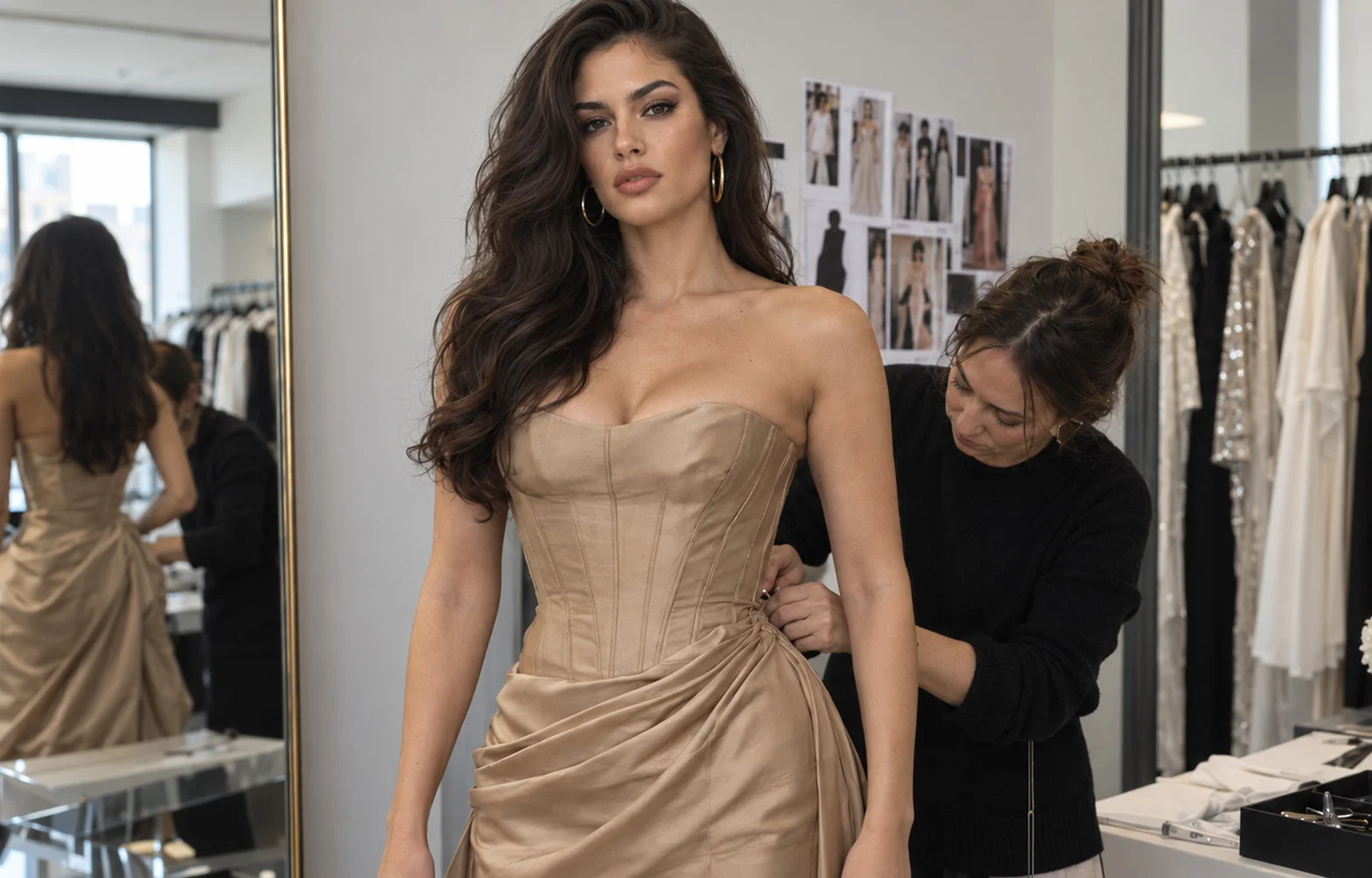
"Most of a fitting is standing still and answering honestly."
What Is Expected of You, in One List
Punctuality. A fitting delayed by fifteen minutes delays everyone behind you.
Stillness. While pinned, taped or measured.
Speed. Between looks. Not carelessness, just no dawdling.
Care with the clothes. They are usually expensive, sometimes irreplaceable samples.
Honesty about fit. Immediately, not afterwards.
A neutral, easy presence. You are not performing here. Pleasant and unfussy is the whole brief.
No phone, no photos of the samples. Unreleased collections leak, and models get blamed.
Ask before you post anything. Assume everything you saw is confidential unless you are told otherwise.
That is genuinely the whole list. The bar is professionalism, not charm.
Your Rights at a Fitting
Fittings get treated as an informal favour more often than they should be, so it is worth knowing where the line sits. New York's Fashion Workers Act, effective 19 June 2025, is the clearest recent statement of these protections, and its principles are a reasonable benchmark even where you work under different rules.
A fitting is modeling work. The Act's definition of a model covers "showroom, parts, or fit modeling services," so fittings sit inside the same protections as a shoot day rather than outside them.
You should know the terms before you start. Model management companies must provide final agreements and deal memos at least 24 hours before services begin (Morgan Lewis analysis of the Fashion Workers Act, retrieved 2026-09-04). The New York State Department of Labor states it plainly: a deal memo listing total compensation must come to you before you start work (NYS DOL, retrieved 2026-09-04).
You may bring someone. Clients must allow a model to be accompanied by their agent, manager, chaperone or other representative.
Long days cost more. For work beyond eight hours in a 24 hour period, clients must pay at least 50% above the contracted rate for the additional hours.
No fees, and commission is capped. Agencies cannot charge upfront fees, cannot take unauthorised deductions, and cannot exceed 20% commission.
Nudity requires separate written consent. It is agreed in advance, in writing, never introduced in the room.
Fittings are normally paid, though often at a fitting rate lower than a full shoot day rate. What matters is that the rate exists and is written down before you go. "We will sort it out later" is how unpaid work happens.
Red Flags
Most fittings are unremarkable. These are the situations that are not.
No confirmed address, contact name or duration in writing beforehand.
A "fitting" at a private apartment or hotel room rather than a studio, showroom or office.
No private or screened changing space offered, and no willingness to arrange one.
Nudity, lingerie or sheer garments that were never mentioned in advance.
Being told you cannot bring anyone with you.
Touching that has nothing to do with the garment.
Pressure to sign something on the spot, or to accept "we will discuss payment after."
You can leave a fitting. At any point, for any reason. Tell your agency the same day and write down what happened while it is fresh. The safety habits worth setting up before your first job are in our modeling tips for beginners.
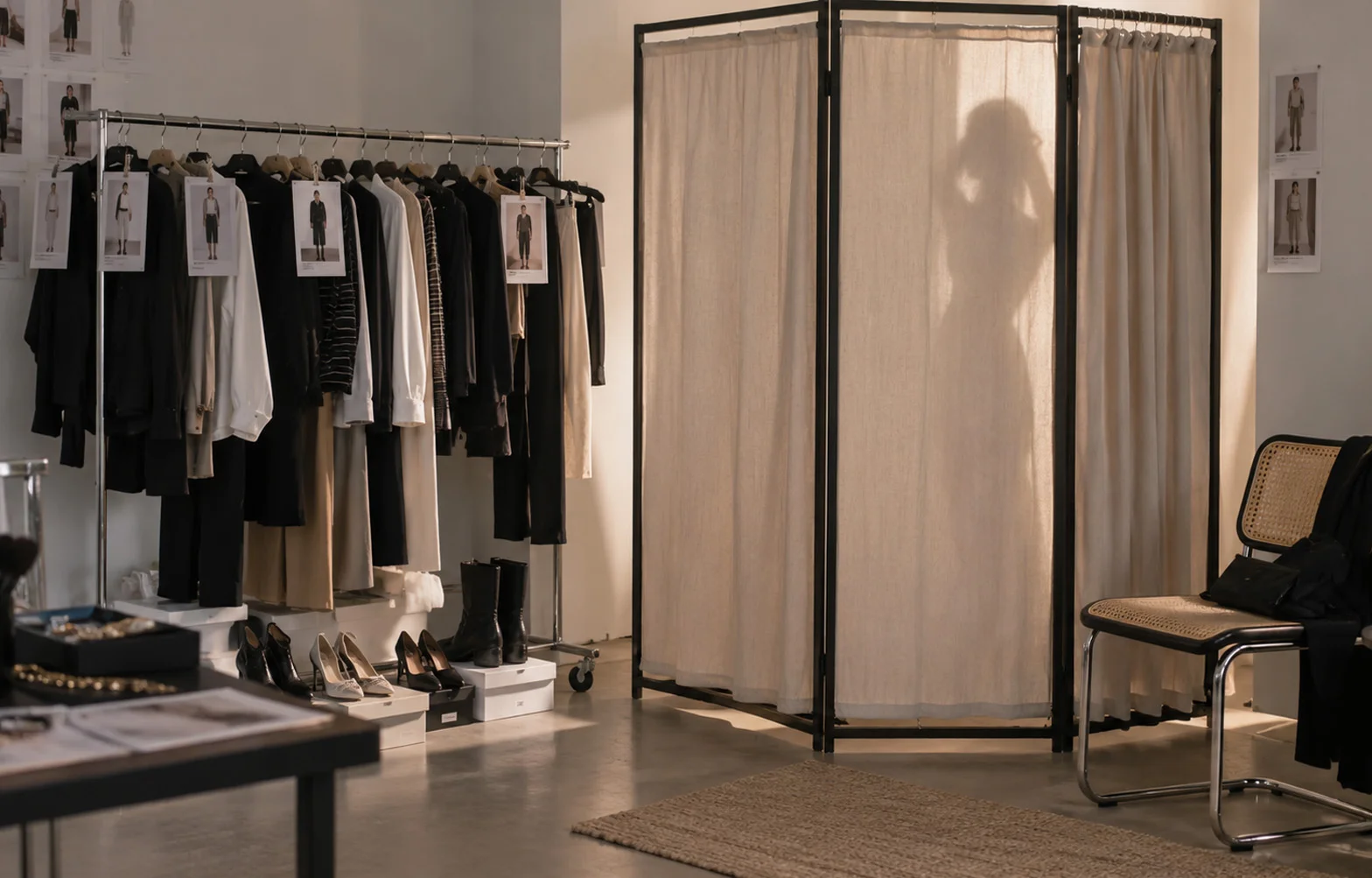
"A screened changing space is a basic professional standard, not a special request."
After the Fitting
The team keeps their reference photos and their notes. Garments get altered, swapped or ordered in another size. You usually hear nothing until the call sheet arrives.
Two things are worth doing on your way out.
Confirm the shoot details if they were not already sent: date, call time, location, and whether anything is expected of you in between, such as keeping a hair colour or not getting a tan.
Write down what happened, briefly. Which looks worked, which shoe size they used, what the client's name was. That note is worth a surprising amount six months later when the same client books you again.
Frequently Asked Questions
Is a fitting the same as a casting? No. A casting is a selection process where you are being considered for a job. A fitting happens after you have been booked, and its purpose is to prepare the wardrobe rather than to evaluate you.
Do models get paid for fittings? Normally yes, though often at a lower rate than a shoot day. The important thing is that the rate is agreed in writing before you attend. Under New York's Fashion Workers Act, fittings count as modeling services and a deal memo must reach you at least 24 hours before you start.
What should I wear to a fitting? Something easy to take off, with nude seamless underwear underneath. A nude strapless bra and nude briefs, no logos or lace. Clean skin, minimal makeup, hair down.
How long does a fitting take? Usually thirty minutes to two hours, depending on how many looks there are. Fashion week fittings can run much longer because of queues, so treat the stated time as an estimate and keep your afternoon loose.
Can I bring someone with me to a fitting? Yes. Under the Fashion Workers Act, clients must allow a model to be accompanied by their agent, manager, chaperone or other representative. Outside New York it remains a reasonable request, and resistance to it is itself a warning sign.
What if a garment does not fit? Say so in the room, immediately. That is precisely what the appointment is for. Staying quiet about a zip that will not close or a shoe that is too small turns a five minute fix into a ruined shoot day.
Can I take photos of the clothes? Assume no. Samples are usually unreleased and confidential. Ask before photographing or posting anything.
The Short Version
Turn up on time, bring nude underwear, keep your face clean, stand still while they pin, change fast, treat the samples like they are expensive, and speak up the second something does not fit.
That is a good fitting. It is a low drama, unglamorous appointment, and doing it well is one of the quietest ways to get booked again.
Sources
New York State Department of Labor, Fashion Workers Act FAQs
Morgan Lewis, New York State Enacts Fashion Workers Act (January 2025)
All sources retrieved 2026-09-04.